
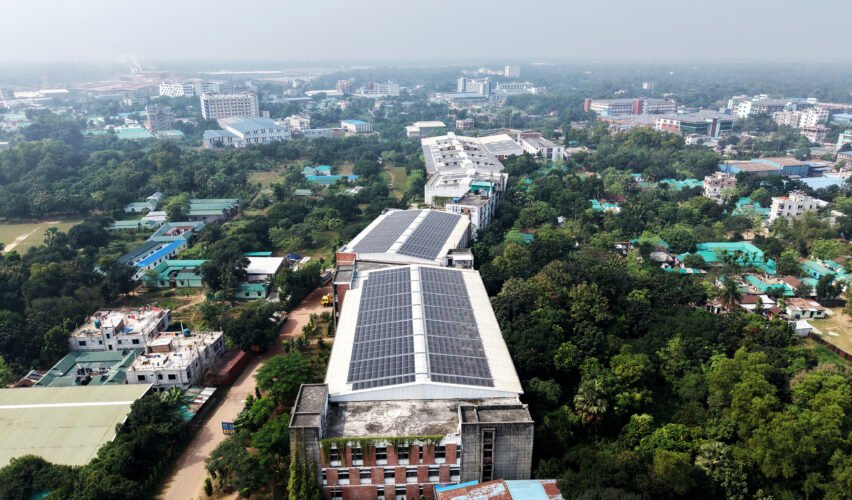
Bangladesh has made recycling of solar equipment waste a legal duty for manufacturers, suppliers and service providers under its new Special Solar Power Installation Act, 2026.
Parliament passed the bill on 18 November by voice vote, The Business Standard reported. The law was published in an extraordinary Gazette on 22 November as Act No 114 of 2026. It replaces an ordinance promulgated on 19 October, and Energy Bangla reports that the act is deemed to have taken effect from that date.
The act requires a “take-back scheme”. According to pv magazine, manufacturers, suppliers and service providers must recycle equipment that reaches the end of its operational life or is damaged in accidents or natural disasters. Energy Bangla says service providers are also responsible for collecting, transporting, recycling and disposing of components. Dhaka Tribune says the duty extends to batteries and other electronic waste.
The rule is written into the contracts. Each project needs a tripartite agreement between the consumer, the service provider and the government authority, on a standard contract format. Dhaka Tribune reported that the agreement must cover e-waste management and take-back, alongside tariffs, equipment standards and net metering.
The act covers “special solar power systems” of up to 5 megawatts. The Daily Star said these can sit on rooftops, courtyards, unused land, tea gardens and water bodies. Large ground-mounted projects are outside its scope, so the recycling duty does not reach them through this law.
The gap it fills is real. Pv magazine notes that Bangladesh has had no standalone policy on solar panel waste. A guide from Bangladeshi equipment maker Muspana says no certified PV recycling facility is known to operate in the country. That is a company’s assessment, not an official count.
Energy specialists told The Daily Star the provision matters because Bangladesh already struggles with e-waste, a problem that has grown with battery-powered auto-rickshaws and rising demand for electric vehicles. Mostafa Al Mahmud, president of the Bangladesh Sustainable and Renewable Energy Association, said panel waste will grow as installations spread.
Implementation is the open question. Chowdhury, an industry expert who spoke to pv magazine, noted that Bangladesh relies heavily on imported equipment. He said it is unclear whether foreign manufacturers will set up local take-back arrangements or whether the burden will fall on local suppliers, distributors or project investors.
The Daily Star quoted an official, Shafiqul, saying the government will need to build further frameworks to make the e-waste rules work. None of the reports reviewed gives a date for those frameworks, or for the standard contract format that will carry the take-back terms.