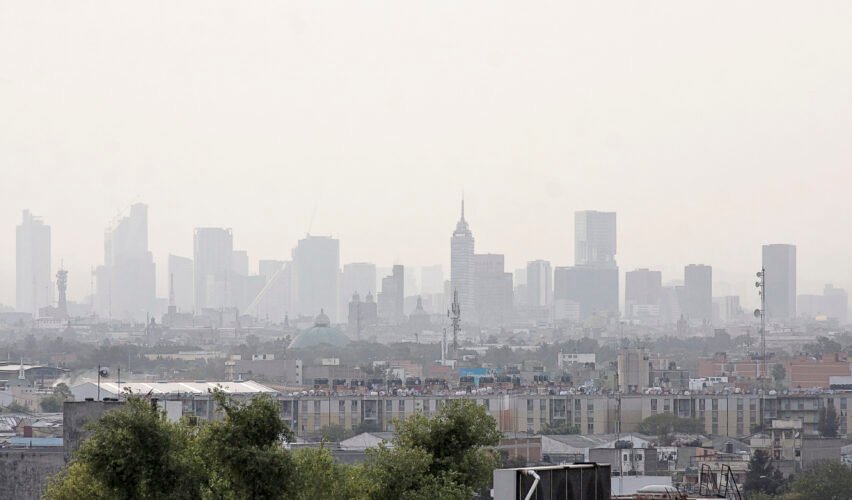
More than two million Malaysian schoolchildren woke up on Friday to a day at home, because the air outside was too smoky to learn in. Toxic haze from wildfires in Indonesia blanketed the region, and the education ministry shut classrooms in and around the capital.
Schools were ordered closed across Kuala Lumpur, the administrative capital Putrajaya, and the states of Johor, Malacca, Negeri Sembilan and Selangor. Classes were also cancelled in the Rompin district of Pahang state. Education Minister Fadhlina Sidek announced the closures on Facebook late on Thursday. She said she had asked state and district education offices to keep monitoring the haze and act at once if conditions required it.
The trigger was a number. On Thursday, King Sultan Ibrahim said schools should close when the Air Pollutant Index (API) reaches 150 or higher. Under Malaysian guidelines, readings above 100 are unhealthy, above 200 very unhealthy and above 300 hazardous. Kuala Lumpur recorded around 170 on Friday. Government data showed 37 areas at unhealthy levels that morning.
Singapore had it worse by some measures. IQAir, a Swiss air quality monitor, put the city-state at an index of 216 on Friday mid-morning, in the “very unhealthy” range. It topped IQAir’s list of the most polluted cities this week, with Kuala Lumpur second. Singapore’s own National Environment Agency measures air differently. It reported the 24-hour Pollutant Standards Index reached 192 in the central region at 5pm, the worst reading of 2026 so far. The pollution arrived as the city prepared for a packed weekend of events, including the Formula One Grand Prix night race.
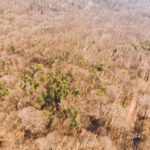
The smoke comes from peatland and forest fires in Indonesia, mostly on Sumatra and Borneo. Peat is dense, carbon-rich soil that smoulders underground and is hard to put out. Smoke from the fires has shrouded cities in the region for more than a month, sending respiratory complaints skyrocketing. Indonesia is battling one of its worst fire seasons in years, as an intensifying El Niño worsens drought. El Niño is a periodic warming of Pacific waters that tends to bring dry weather to the region. Singapore’s agency said hotspots were detected mainly in Kalimantan and southern Sumatra.
Diplomacy has started. Prime Minister Anwar Ibrahim said he had spoken to Indonesian President Prabowo Subianto, who had agreed to take “the necessary steps”. No details were given. Anwar said he had asked Foreign Minister Mohamad Hasan to contact the secretariat of the 11-nation Association of Southeast Asian Nations (ASEAN) and arrange an urgent meeting of environment ministers. Malaysia is also stepping up cloud seeding, a technique for triggering rain.
Anwar’s own assessment was short. “The haze issue is indeed at a worrying level,” he said.