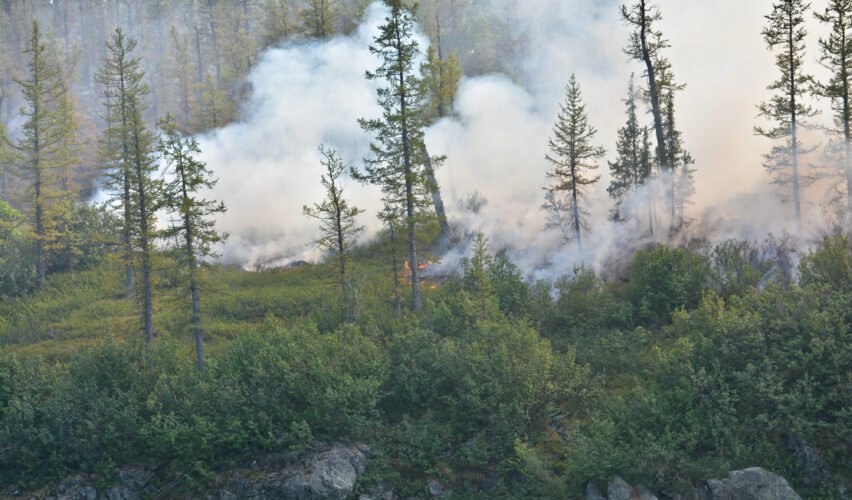
In late September, flames reached within 15 feet of a slender sengon tree in Laman Satong village, Ketapang regency, West Kalimantan. A young orangutan was clinging to its branches, according to National Geographic. The animal had been caught inside a high conservation value patch of a palm-oil concession, forest set aside for its ecological worth. It was rescued on 30 September.
The scene sums up what Indonesia is dealing with in 2026. Fires are still burning across Kalimantan, the Indonesian part of Borneo, and Sumatra, with another front in South Papua, according to air-quality firm IQAir’s 1 October update. The Forestry Ministry logged 1,201 high-confidence hotspots nationwide on 7 October, reported The Star via Bernama. A hotspot is a satellite-detected heat point, not a count of separate fires. Central Kalimantan had the most of the six priority provinces, at 182. Haze has also reached Malaysia.
Counts have since fallen. Bernama reported 387 hotspots on Thursday night, down from 1,176 the day before, though the ministry said dry weather keeps the risk high.
Tropical rainforest seldom burns on its own. The Rainforest Alliance notes that humidity keeps even dry-season vegetation too damp for lightning or a stray spark to take hold. Burning in Indonesia is mostly deliberate, to clear land for plantations or farming.
The damage then sets up the next fire. A study in Nature Communications says drainage and deforestation make naturally fire-resistant peatland susceptible to burning. Fires lit to clear land can run out of control into degraded forest and peat, especially in El Niño years. This year’s El Niño, a Pacific climate pattern that suppresses Indonesian rainfall, is developing again, and the meteorology agency BMKG has warned it could expand hotspots. Peat that has dried out smoulders underground, which makes it hard to put out and liable to flare again.
David Gaveau, founder of the conservation group TheTreeMap, told Bloomberg: “The massive scale of today’s fires is the legacy of 50 years of forest degradation, deforestation, and peatland conversion.” Bloomberg reported that the government is investigating more than 160 people and 95 companies over the fires.
Forest loss is rising again. Satellite analysis cited by Eco-Business shows 122,000 hectares were lost in 2024, up from the 2021 low, and 67 per cent of Indonesian oil palm companies recorded deforestation that year. President Prabowo Subianto has called slash-and-burn clearing “ecological terrorism”, according to the same report. He has told regional governments to end exemptions that let smallholders use fire on small plots.
On peat alone, the disaster agency says that as of 7 September crews had put out about 98 per cent of 72,009 hectares burned across six provinces. West Kalimantan accounted for the largest share. Central Kalimantan’s emergency alert runs to 31 October, and Jambi’s runs to 30 November.