R400 million. That is the saving Cape Town says its residents will see over the next 20 years from one patch of 12,850 solar panels and two big batteries. The City’s logic is simple. Power it makes itself should cost less than power it buys from Eskom, the national utility, and every rand not sent to Eskom stays in the city’s budget.
The problem: a city that buys most of its power
When construction began in October 2024, Energy Mayco Member Xanthea Limberg (the councillor who oversees energy on the mayoral committee) put the dependence in plain numbers. According to Engineering News, the City was then spending 75% of its electricity tariff income on buying Eskom power. Mayor Geordin Hill-Lewis says the aim is to cut reliance on Eskom’s pricing and its large annual increases, so that savings can reach residents over time.
What the City built
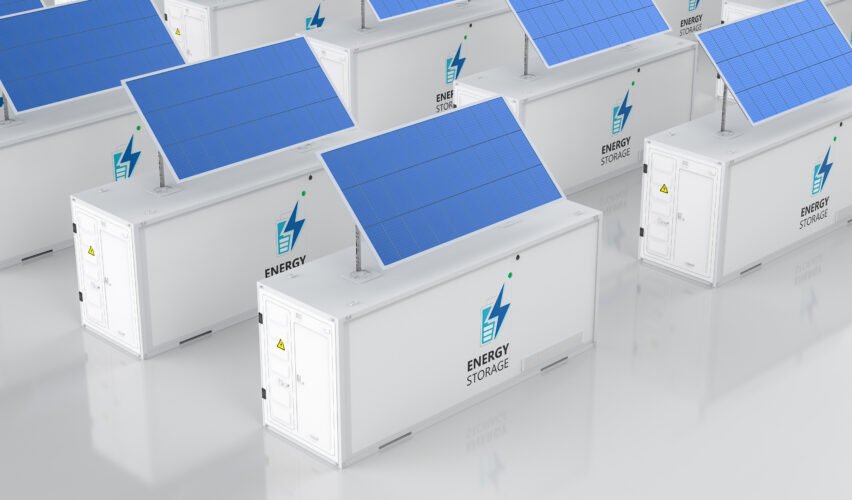
On Thursday 8 October 2026, Hill-Lewis launched the Helderhoop Solar and Storage Power Plant in Atlantis. The City calls it South Africa’s first hybrid power station built by a metropolitan municipality. According to the City’s press release, the R220 million facility covers 15 hectares, roughly 21 rugby fields. It has 12,850 solar panels and two utility-scale batteries. “Hybrid” here means the batteries sit beside the panels, so midday sun can be stored and used later.
The name means “Bright Hope”. It was proposed by Vinolio Cloete, who was a matric (final-year school) learner at Saxonsea High School when the City ran a public naming competition, Green Building Africa reports.
The project grew in two steps. The solar plant came first, at a budgeted R200 million for 7MW, with a design that could scale to 10MW. The contract for engineering, procurement and construction went to the Lesedi Technoserve Consortium. The same week, the City issued its first battery tender. Limberg described the storage as a trial run, saying it “aims to serve as a pilot project to eventually incorporate energy storage within the city’s network.”
The tender asked for at least 5MW of output and 8MWh of usable storage. The launch coverage I found gives the number of batteries but not their final rated capacity.
The results so far
Construction is finished. Limberg said the plant is running under controlled test conditions as part of commissioning, so it is not yet in full commercial service. About 305 jobs were created during construction, along with training in renewable energy work, the City said.
The R400 million figure is the City’s own estimate, and it rests on the claim that Helderhoop power costs less than Eskom’s. The sources do not give the per-unit price. Nor do they give how much of the city’s demand the plant will cover or how much electricity it will generate each year.
Hill-Lewis tied the launch to other recent moves. He said Cape Town had just become the first city to buy power on the open market, at rates 20% cheaper than Eskom, under an initial 200MW independent power procurement programme, ITWeb reports. He also said the plant shows that “municipalities can play a leading role in building their own energy future”.
The City also points to smaller projects. Its small-scale embedded generation programme (solar on municipal sites that feeds the grid) has installed 2.2MW so far, with a target of 25MW over the next two years. More than 250MVA of rooftop solar has been installed across the metro, according to Cape {town} Etc.
The delays and the limits
The schedule slipped. In 2024 the City expected first power near the end of 2025. Nearly a year later the plant is still being tested. The budget also grew, from R200 million for the solar plant to R220 million for solar and storage together, though the sources do not say whether the two figures cover the same scope.
The earlier timetable for the next project also moved. In 2023, Energy-Storage.News reported a planned R1.2 billion (US$65 million) solar-plus-storage plant at Paardevlei, near Somerset West, with commissioning targeted for August 2026. Feasibility studies for a 70MW version are now complete, and the City is aiming to have it developed by 2029.
What other cities can take from it
The City owns and operates Helderhoop itself, which is why savings should accrue to the municipal budget rather than to a private generator. It also started small, at 7MW with a battery pilot, before committing to a larger plant. Other metros would face the same questions on financing and grid connection. The sources do not say how Cape Town financed the project.
Helderhoop is not yet in full commercial operation, and no date for that has been published. The City has not released a tariff or an output figure to test its R400 million estimate against.