
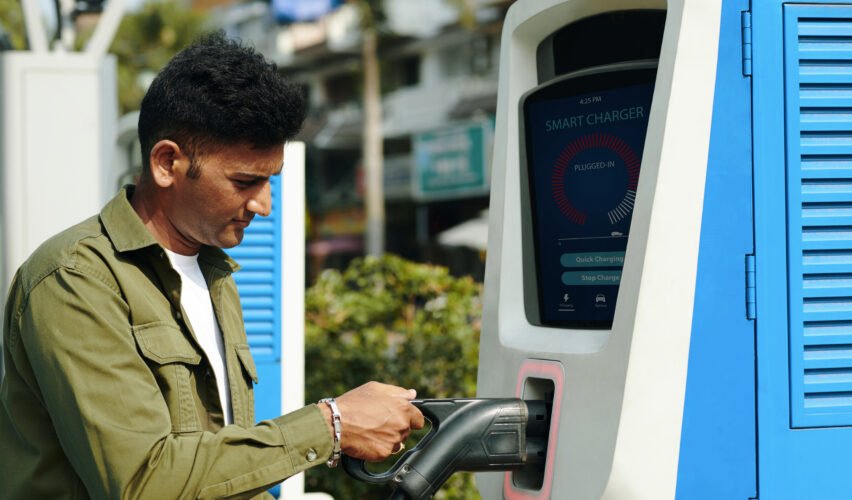
Fifteen thousand is the number in the headlines, and it is easy to misread. These are existing ChargeZone charging points being enabled for Paytm payments, not 15,000 newly installed chargers. What has changed is how a driver pays.
One 97 Communications Limited, which runs Paytm, said on 23 November 2026 that it has partnered with ChargeZone to enable Paytm QR payments at more than 15,000 high-speed EV charging points across over 1,200 locations in India, covering highways, cities and commercial hubs.
The process is simple. EV users scan the dedicated Paytm QR code at a ChargeZone station, enter the payment amount and pay through Paytm before starting their charging session, the company said in a release. The code is a QR code, the square barcode that India’s phone-based payment apps use to move money between accounts.
Behind the scenes, the integration is facilitated through ChargeIndia, an EV charging aggregation platform that connects Paytm with multiple charging networks through a single interface. That setup could in principle let Paytm add other operators without building a separate connection to each. The coverage reported so far is ChargeZone only.
ChargeZone already has its own app, which lets drivers find charging stations, book a session online, and pay with a wallet, card or net banking. The Paytm code adds a way to pay without opening that app.
The announcement sits against a wider shortage. Parliament was told in July that India has 52,718 public EV charging stations, including 16,561 fast chargers for cars. That figure comes from a written reply in the Lok Sabha, the lower house, as reported by secondary sites rather than the original document. Counting methods differ: ChargeZone’s figure is for charging points, and the government’s is for stations. The two are not directly comparable.
Estimates of what the country needs are far higher. India needs an estimated 1.32 million public charging stations to support 30 percent EV penetration by 2030, according to ORF, a think tank. ChargeZone has set its own target of one million charging points by 2030, against the 15,000 it operates now.
Neither company has published figures on how many drivers will use the Paytm option, or any fee arrangement. The release gave no such details, and the coverage reviewed does not report them.
ChargeZone’s founder and chief executive, Kartikey Hariyani, framed the deal as part of making the network easier to use. In the company’s release he said: “What matters is how easily people can use it.”