State Grid Corporation of China, the world’s largest utility, plans to spend up to 4 trillion yuan (about US$574 billion) on fixed assets between 2026 and 2030. That is a 40 percent increase on the previous five-year plan, according to the state-asset regulator SASAC. The money is meant to move more wind and solar power to where it is used, and to feed a fast-growing data-centre sector.
The company announced the plan in January. Its details have since been backed by a national blueprint. On 3 August the National Development and Reform Commission and the National Energy Administration issued the 15th Five-Year Plan for the Construction of New Power Systems. Headlines describing a “multi-trillion-dollar” upgrade overstate the figure. The sums are in trillions of yuan.
The spending works out at an average of 800 billion yuan a year, above the record 650 billion yuan State Grid invested in 2025. The second big operator, China Southern Power Grid, set its 2026 investment at 180 billion yuan, and the industry expects about 1 trillion yuan over the five years. Together the two would approach 5 trillion yuan, against 2.64 trillion yuan in the 13th plan period (2016-20) and 2.85 trillion in the 14th.
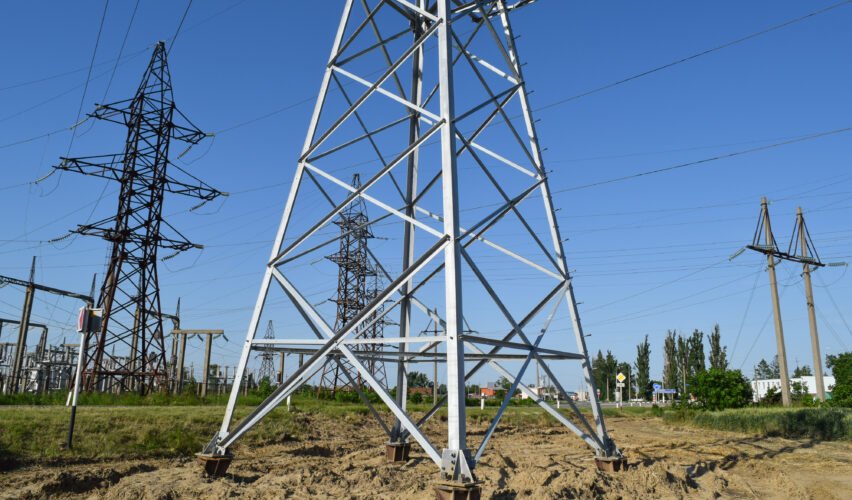
The problem is geographic. Most of the new investment will go to western regions, where power supply is in surplus but grids to carry it are short, according to Huatai Securities. State Grid says it will build ultra-high-voltage direct current export channels to raise cross-regional and cross-provincial transmission capacity by more than 30 percent from end-2025 levels. It also plans to optimise the siting of pumped-storage hydropower and support large-scale new energy storage.
The utility’s targets for 2030 are about 200 gigawatts of new wind and solar capacity a year in its operating zones, non-fossil energy at 25 percent of consumption, and electricity at 35 percent of final energy use.
AI is part of the case for spending. Data centres built by Huawei, Tencent and Alibaba sit in the west under a 2022 national scheme. Both grid operators are also deploying AI-driven sensors and software to manage distribution networks that take in rooftop solar and electric-vehicle charging.
Underuse of renewables is the pressure behind the shift. Beijing is moving its focus from building renewable plants quickly to making sure more of their power reaches the grid. Zhao Li, planning director at China Southern Power Grid’s Guangdong unit, told Bloomberg that “Absorbing renewable energy into the grid is of paramount importance.” Goldman Sachs expects renewables to supply 30 percent of China’s power generation by 2030, with intermittency putting pressure on stable grid operation.
The utilities’ own plans are modest next to BloombergNEF’s estimate. The research group says China will need to put $3.9 trillion into its grid through 2049.