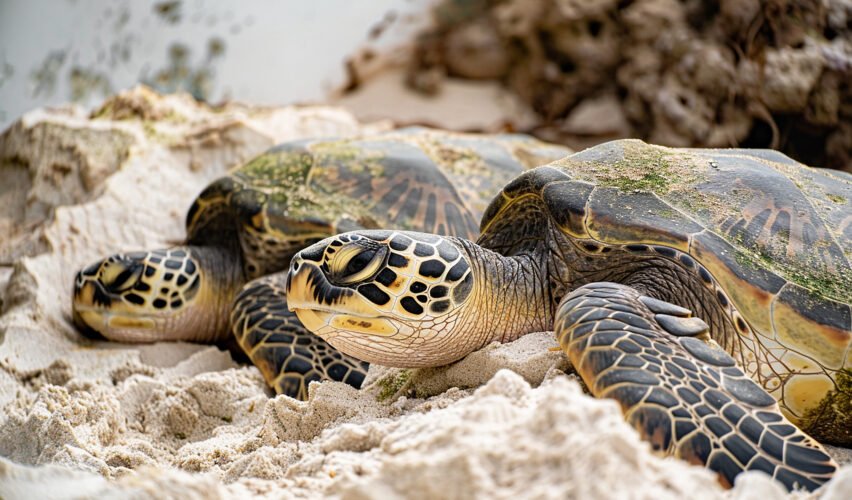
Loggerhead sea turtles laid a record 4,292 nests on Georgia beaches this year, a rebound from a low of 358 nests in 2004.
The Georgia Department of Natural Resources (DNR) said in early August that the count had passed the old mark. Nests stood at 4,080 on the morning of July 29, the most since 1989, when surveys expanded to cover all barrier island beaches. The previous high was 4,071 in 2022.
The final total came in higher still. The state’s online nest database lists 4,292 nests for 2026, with the last nest laid on Blackbeard Island on August 30.
Loggerheads are federally listed as threatened. The recovery plan from the National Marine Fisheries Service and the U.S. Fish and Wildlife Service sets a goal of 2,800 nests a year. That figure has been exceeded three times in the last five summers. Counts swing from year to year. Nesting dipped to 3,431 in 2023 and to just over 2,490 in 2024.
The count rests on a lot of daily footwork. Hundreds of volunteers and professionals walk beaches from Cumberland to Tybee nearly every day from May through August. The Georgia Sea Turtle Cooperative, a DNR-coordinated network, marks, monitors and protects the nests.
On Wassaw Island, a national wildlife refuge, the effort runs through the night. Teams stay on the island for a week at a time, working from sundown to sunrise to survey nesting turtles and their hatchlings. The Caretta Research Project, in its 54th year, is the longest continuously running saturation tagging program in the U.S.
Biologists saw one oddity this year. Females nested more en masse than usual, producing extreme highs followed by lows. Mark Dodd, the DNR’s sea turtle program coordinator, said the pulses were more extreme than in the past. The DNR cannot quite explain the trend.
Dodd cautions that the recovery is incomplete. Loggerheads do not reproduce until they are 30 to 35 years old, he said. Based on current trends, he predicts it will take another 10 years to reach recovery goals.
Hatching results are still being tallied. The state database showed 53 nests still incubating, with hatch success averaging 50.6%. The DNR’s final figures will come once the last of those nests have hatched and been inventoried.